




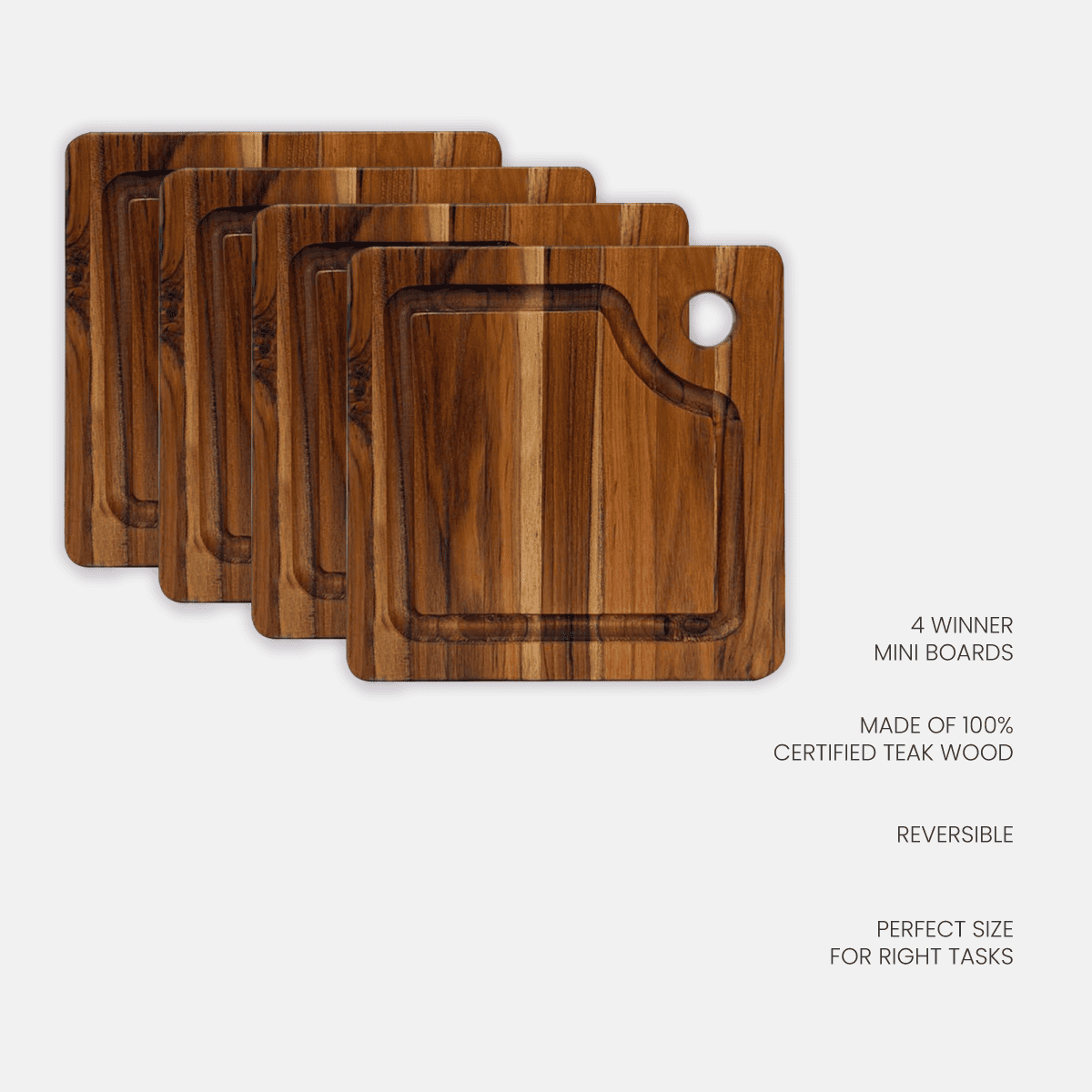
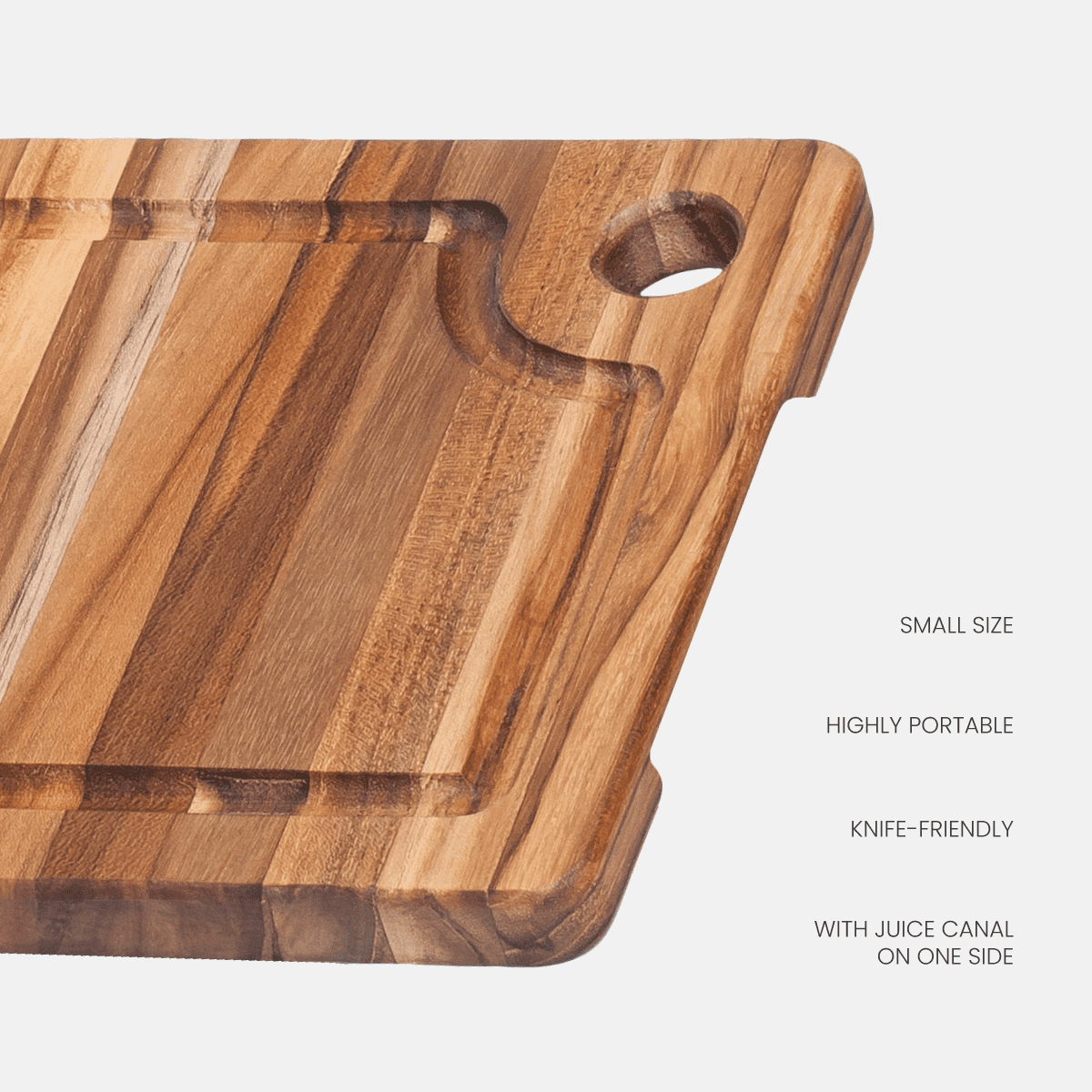
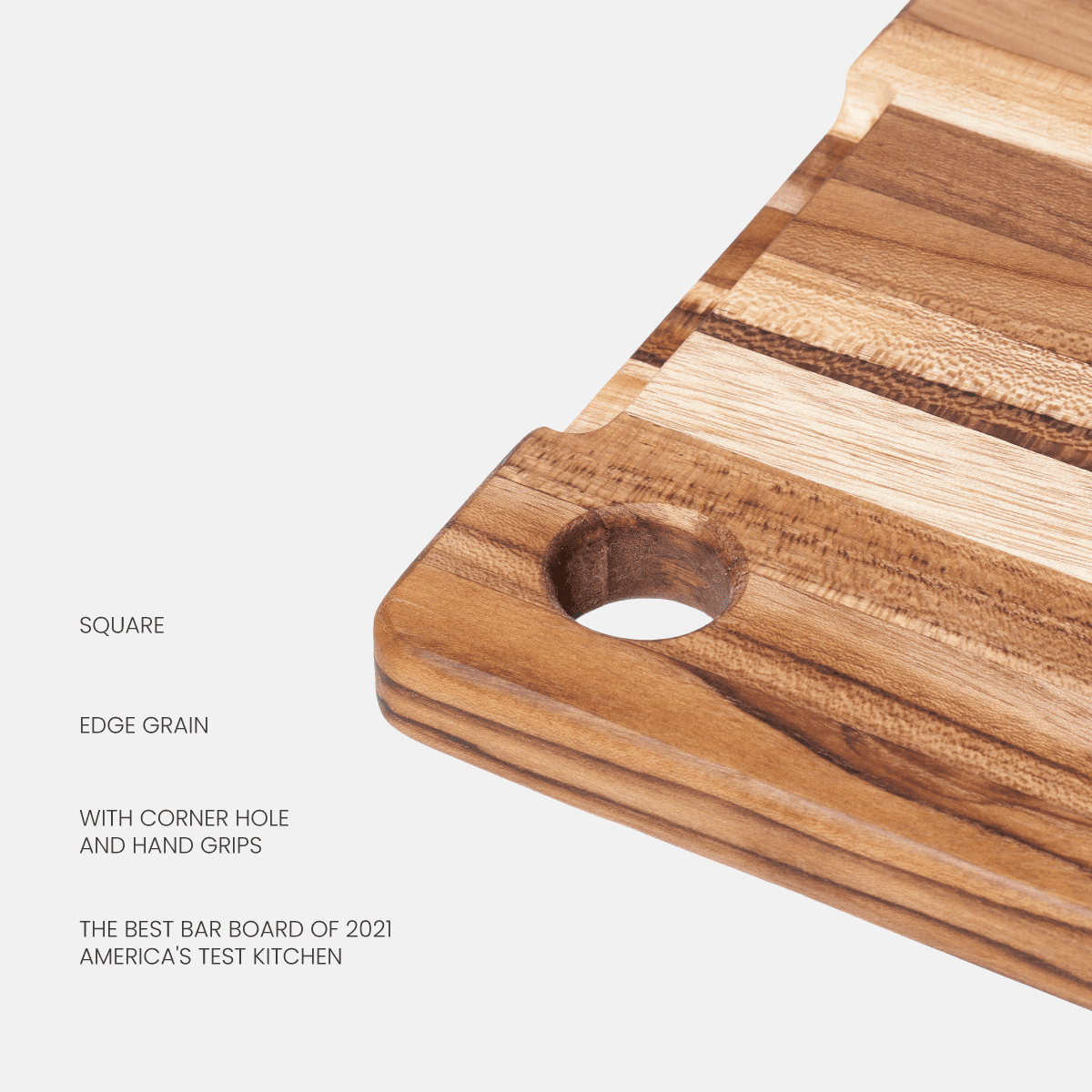
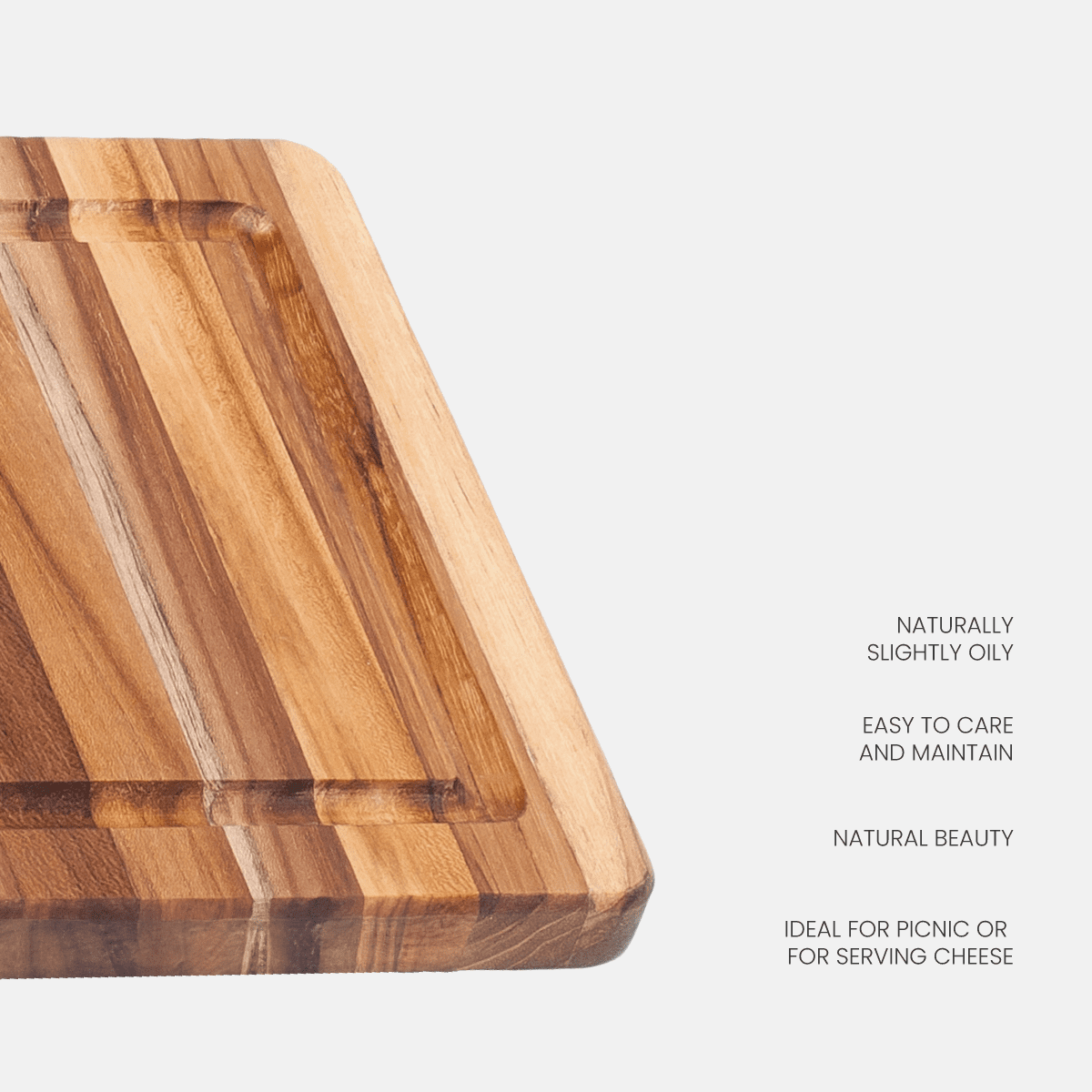




Bar Board set of 4 (S) 513
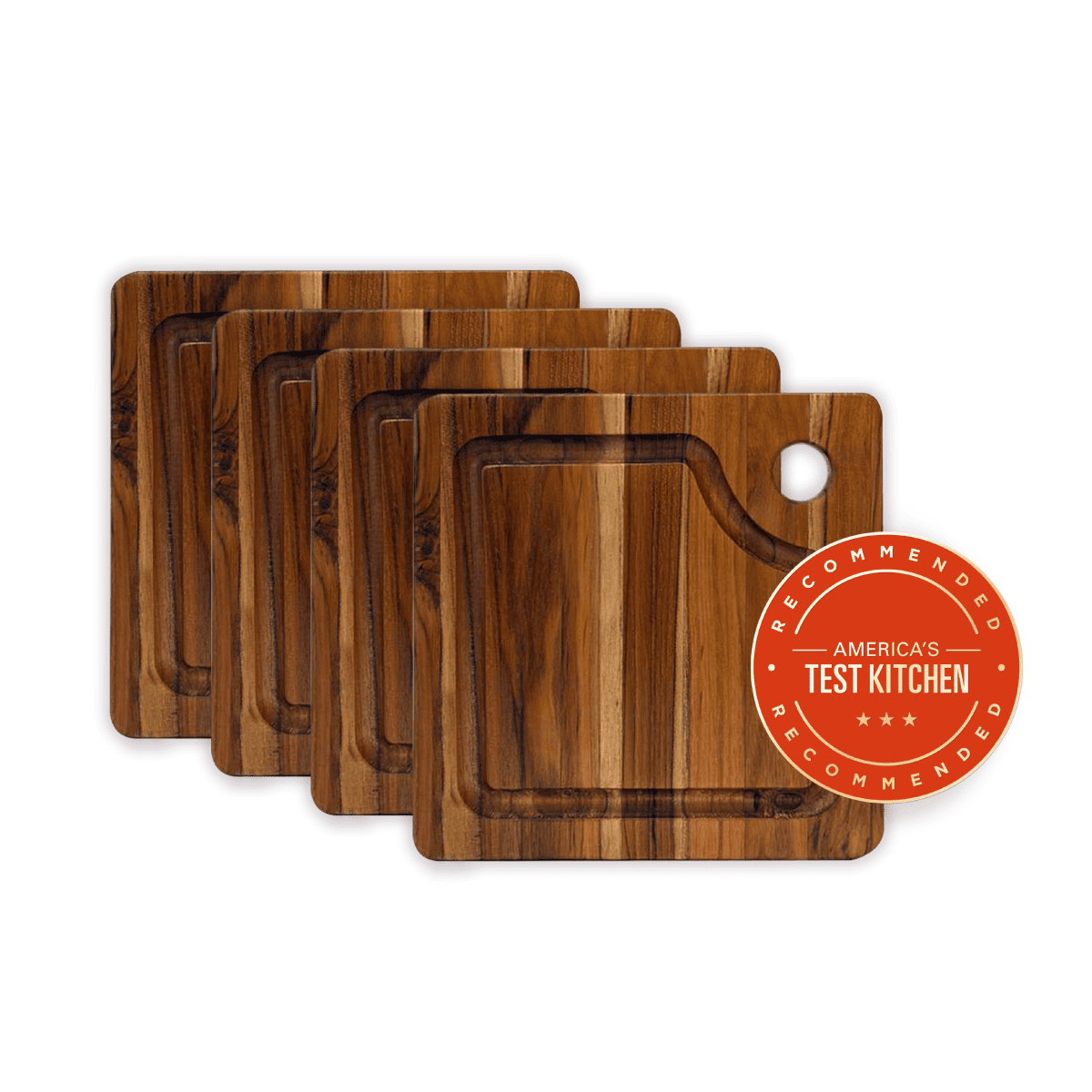
Size: 8 x 8 x 0.5 in each | Weight: 1 lb each
Edge Grain · Set of 4 · Multi-Use · FSC® Certified
★ Best Bar Board America’s Test Kitchen
Summary
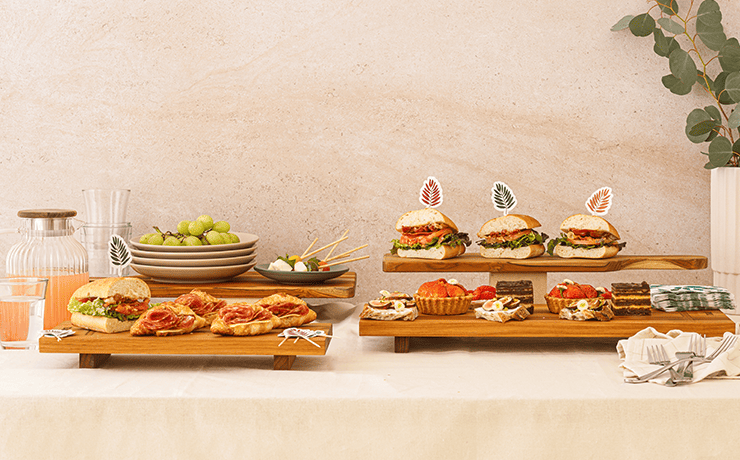
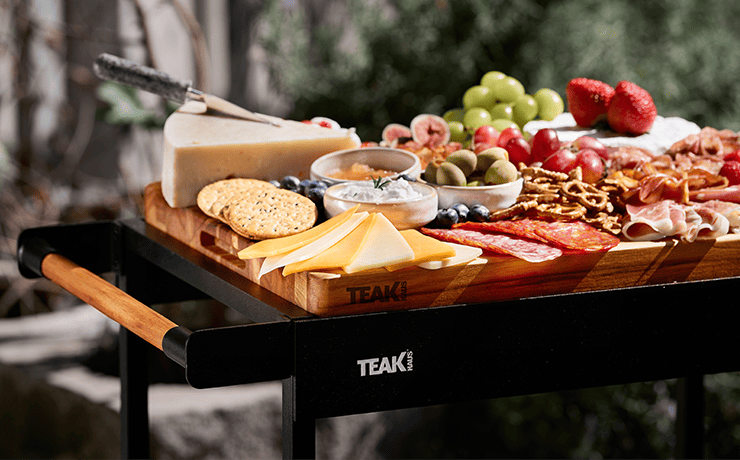
Four boards, zero rinse breaks. Set up citrus on one, herbs on another, cheese on a third, keep the last clean for plating. Perfect for cocktail garnish prep, individual charcuterie servings, appetizer plates, or kid-sized cooking stations. Compact enough for picnics and outdoor entertaining. Teak’s natural oils resist stains and odors better than other woods.
Sustainably sourced from FSC®-certified teak forests. Zero-waste production.
Care: Pre-oiled and ready to use. Hand wash, towel dry. Apply mineral oil monthly.
Teakhaus has been honored with the 2025 FSC® Leadership Award — a milestone that celebrates more than just products.
🌳 Respect for forests.
🏭 Dignified jobs for people.
🌍 A global commitment to traceability and care.
For over 20 years, Teakhaus has lived by one conviction: forests deserve respect, and so do the people who work them. This award is a recognition of that philosophy — and of everyone who has trusted and supported us along the way. Read more here
READY TO USE: Our boards are pre-oiled and ready to use! Before first use, wash, rinse, and dry with a kitchen towel. We use a mixture of mineral oil and natural beeswax to coat. However, we recommend you apply Teakhaus oil or food grade mineral oil regularly at least two or three times a month to maintain your board in perfect condition!
Non dishwasher-safe
Non microwave-safe
Non oven-safe
To learn more about the care and maintenance of your cutting boards, please go to our Care and Maintenance section here.
Choose options
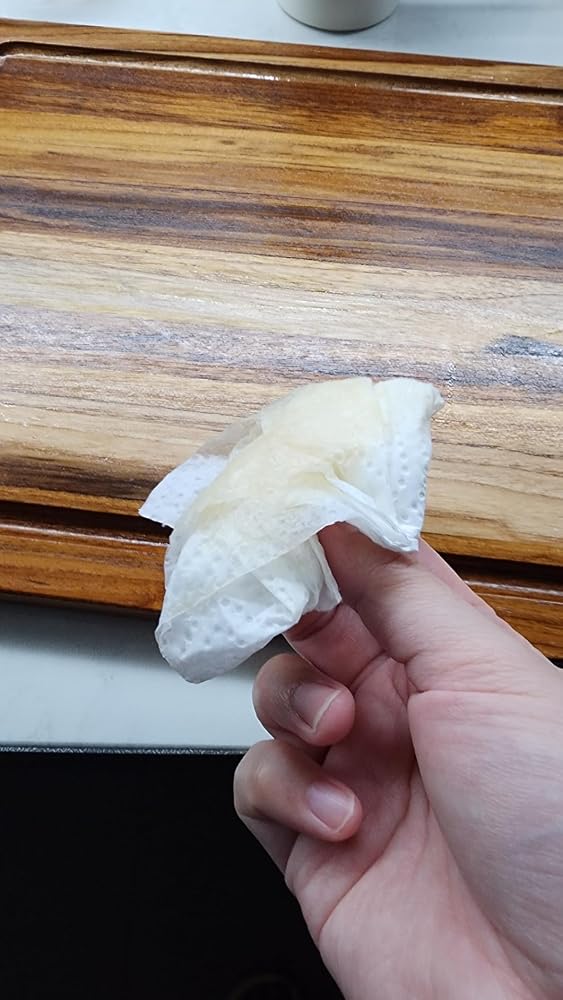
Very rough surface.Gentle wash towards grain direction - brand new sponge (soft side)Many wood fibers. Sponge and paper towel which i used pat dry, turned brown in colour.Dont think it's safe for food preparation


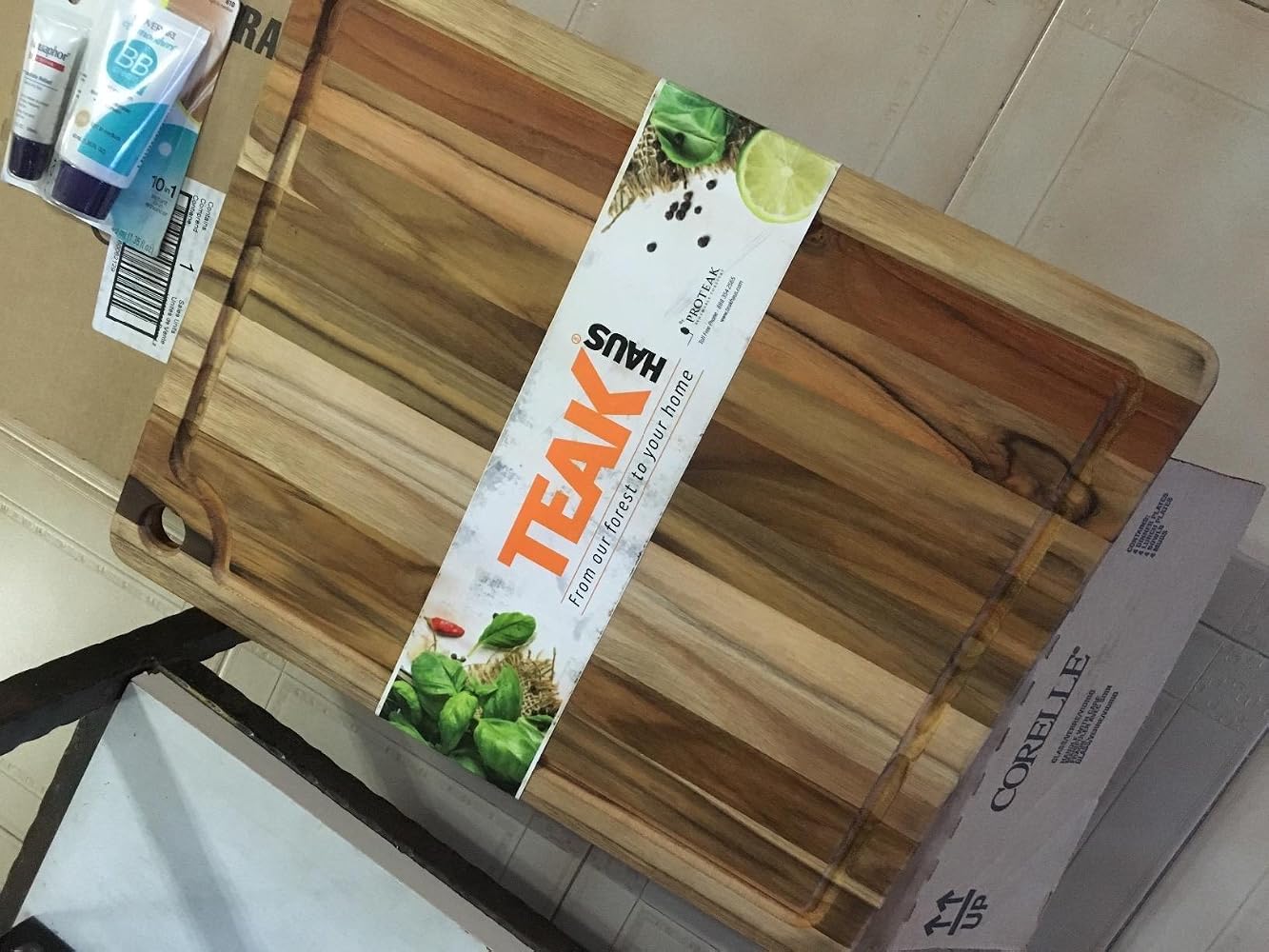
The cutting board is beautiful! My hubby loves it. Its big and appears to be in good condition. How can anyone not love it! Appears to be very solid and good quality!Follow-up 24 Apr: unfortunately this chopping board looks better than it works. I just moved house and finally took this board out to use. Within 1 month, the board warps. Nahhhh will not ever buy this or recommend anyone to get this.
My cutting board split in two after just a few months of casual use!!
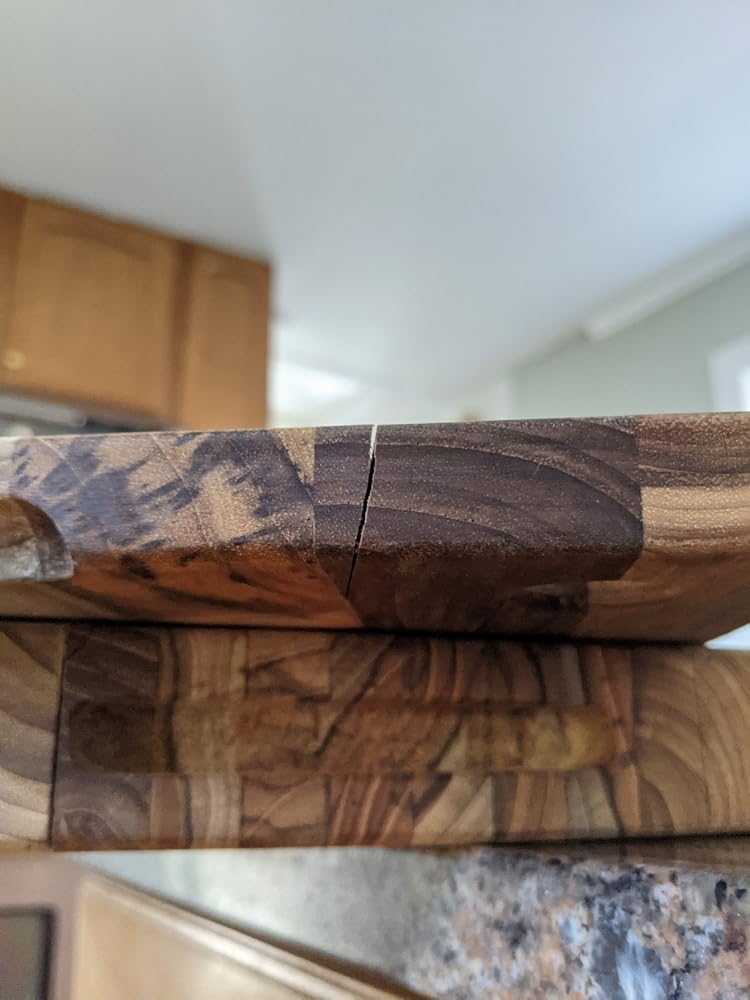
Was really excited to receive this a few minutes ago. However, already cracked. Started my return. Hopefully seller will do a full refund on this.
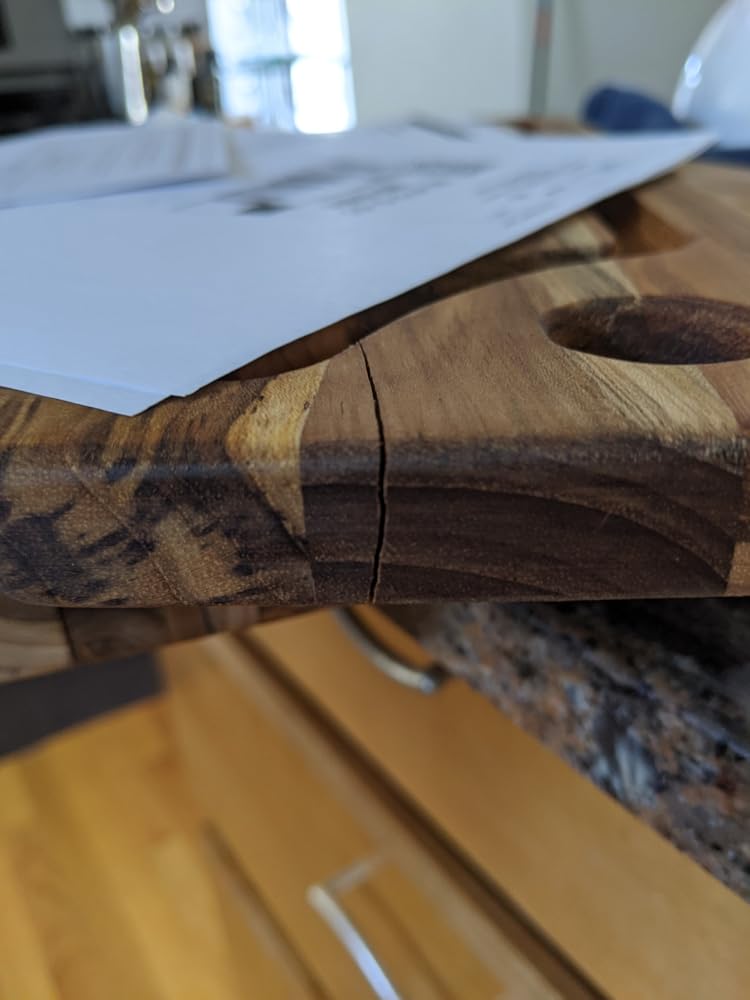
Mine wasn't a piece of Art as one reviewed, which is why I purchased it. It's not sanded completly or finished. It's rough wood, some pieces looking molded and glued in? Splinters of wood fleck off just putting my hand on it, really? Really Terrible!!
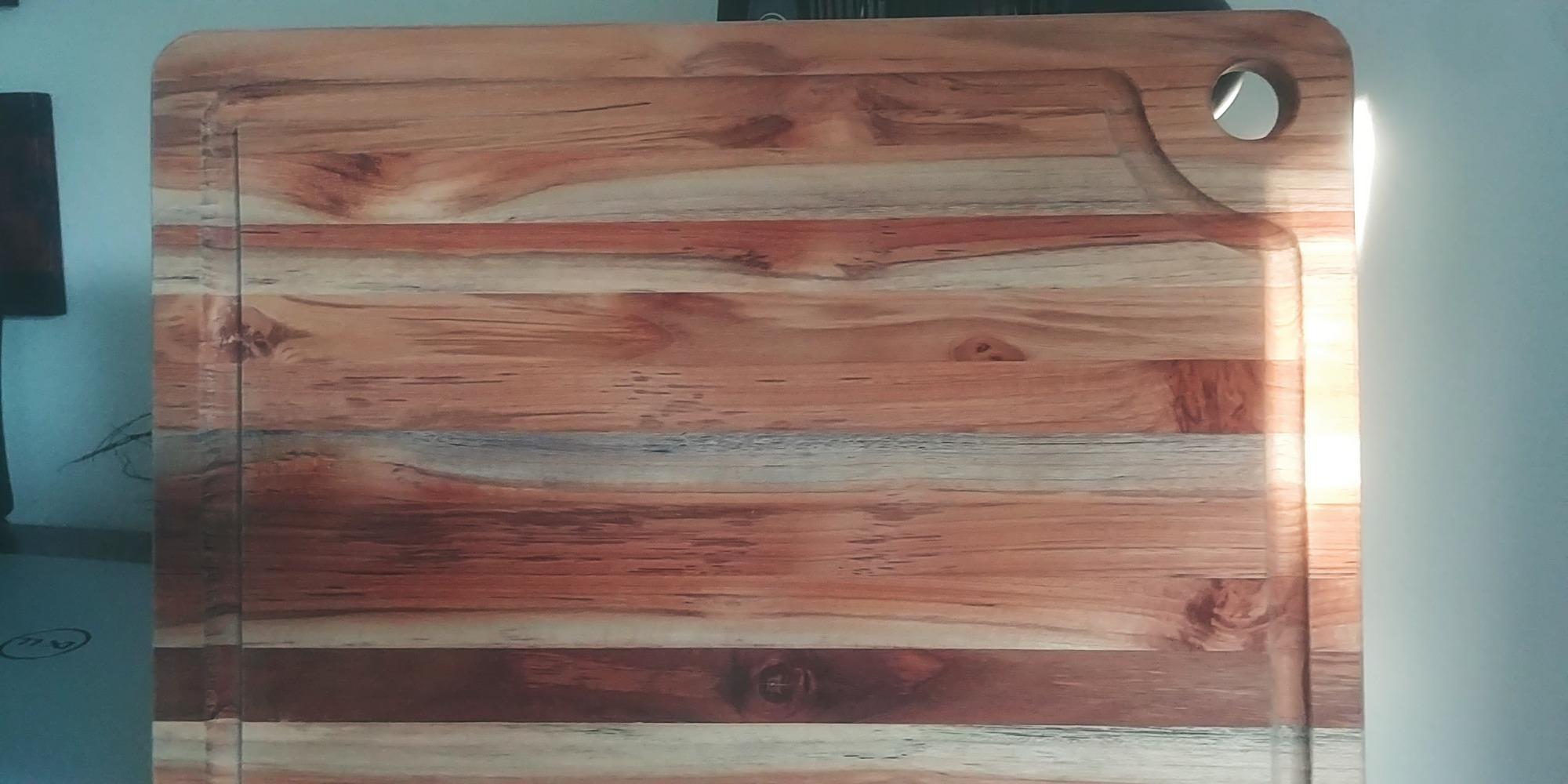
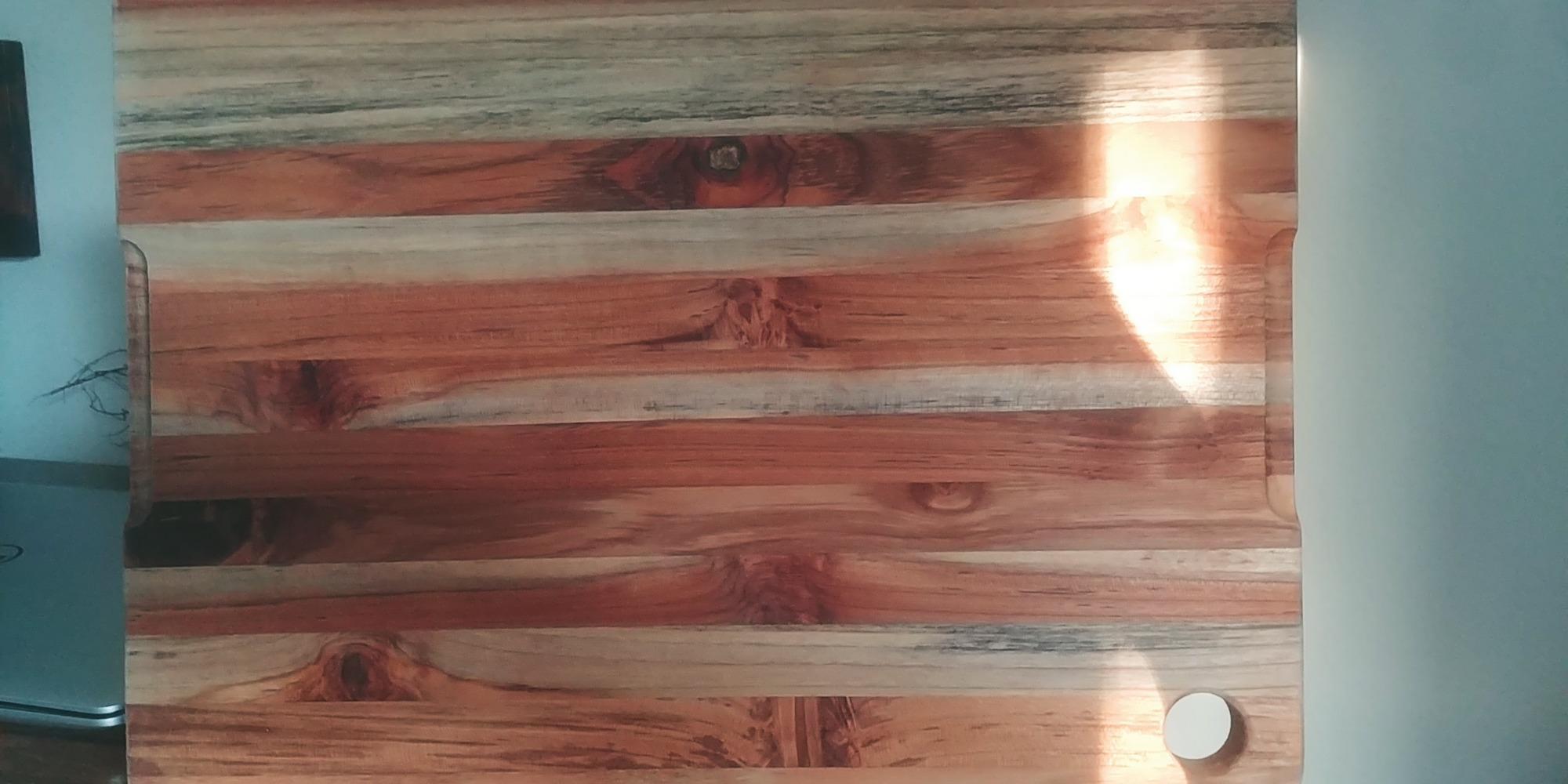
The product warped after only 1 week of use. Very very disappointed. Would not recommend.
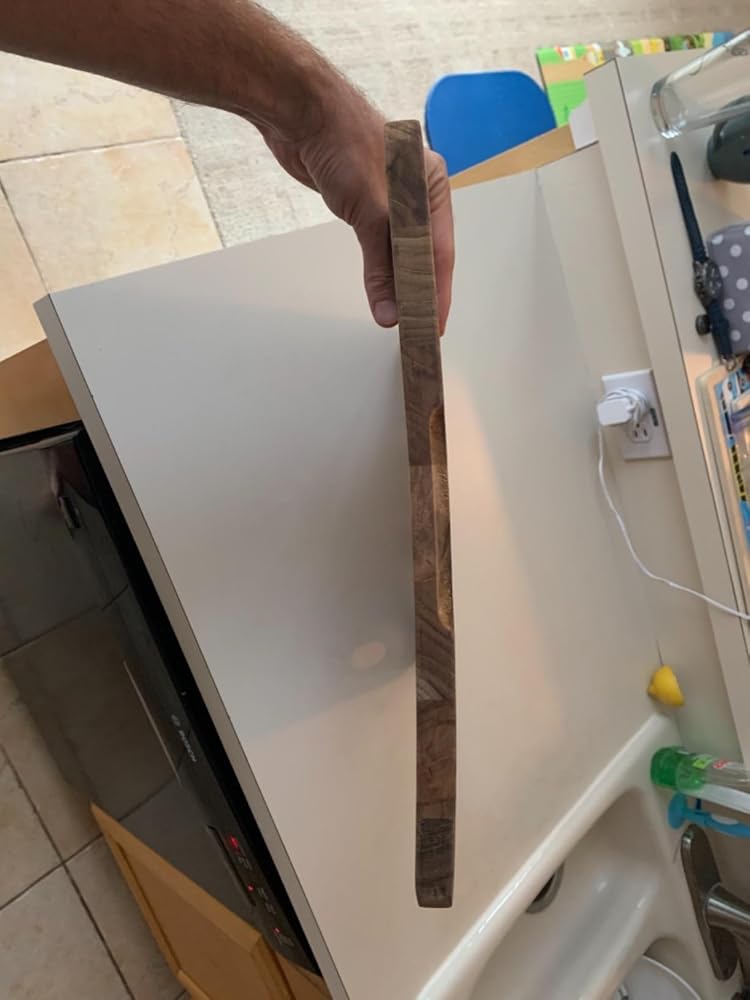
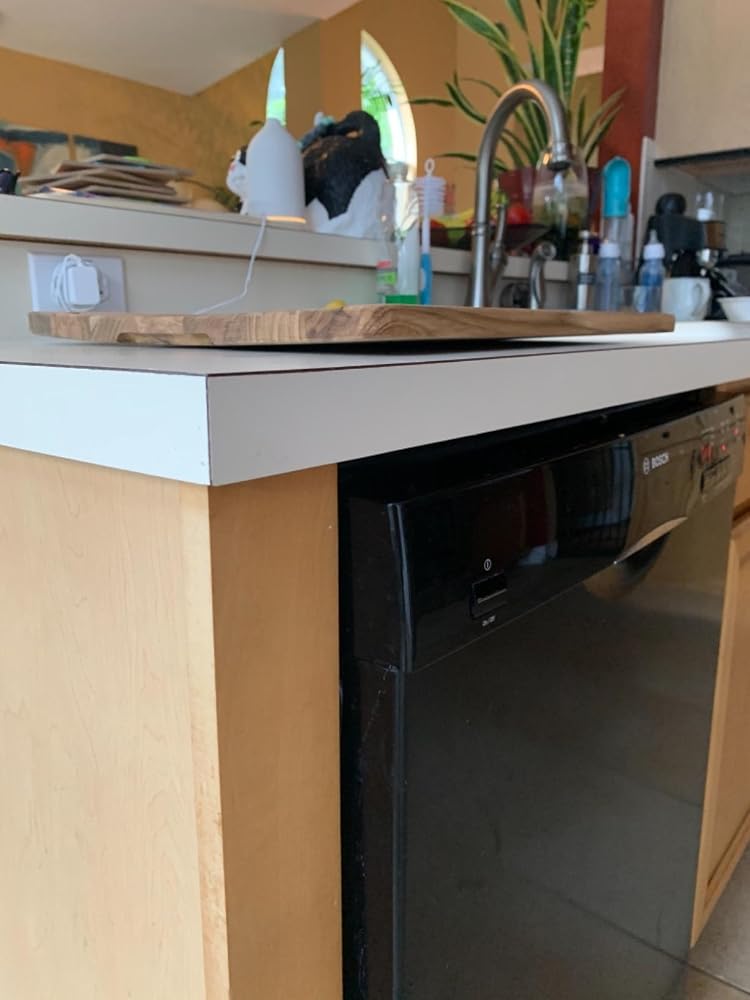
I was really excited to get this beautiful cutting board but after just a few washes with soap and water became warped and would not sit flush on the counter. Shortly after that it cracked.
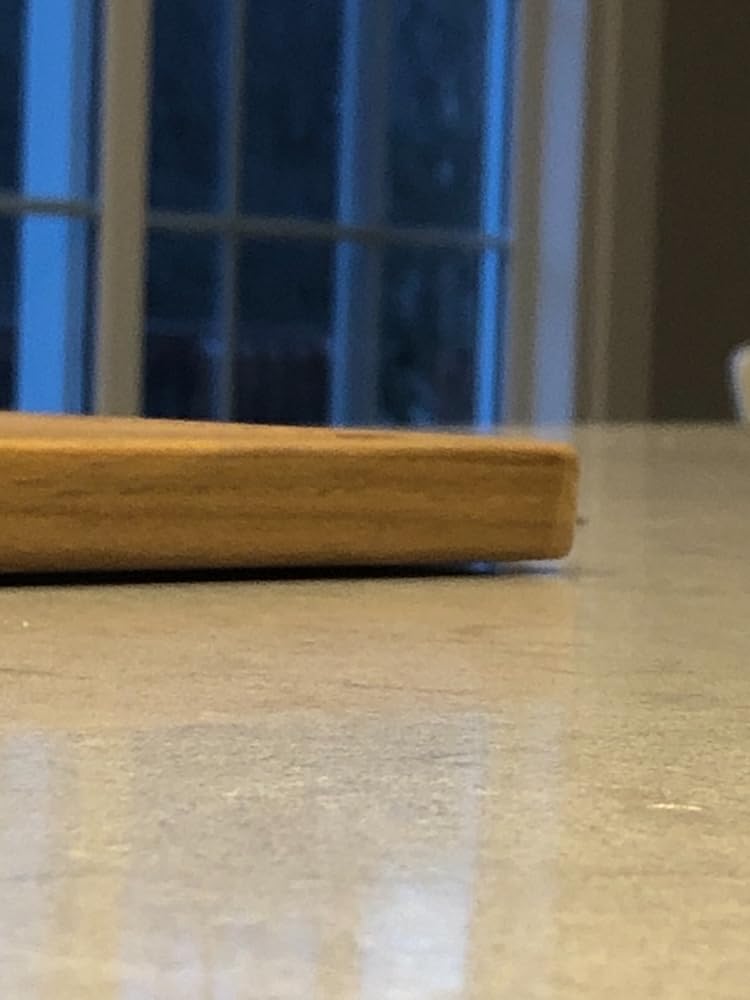
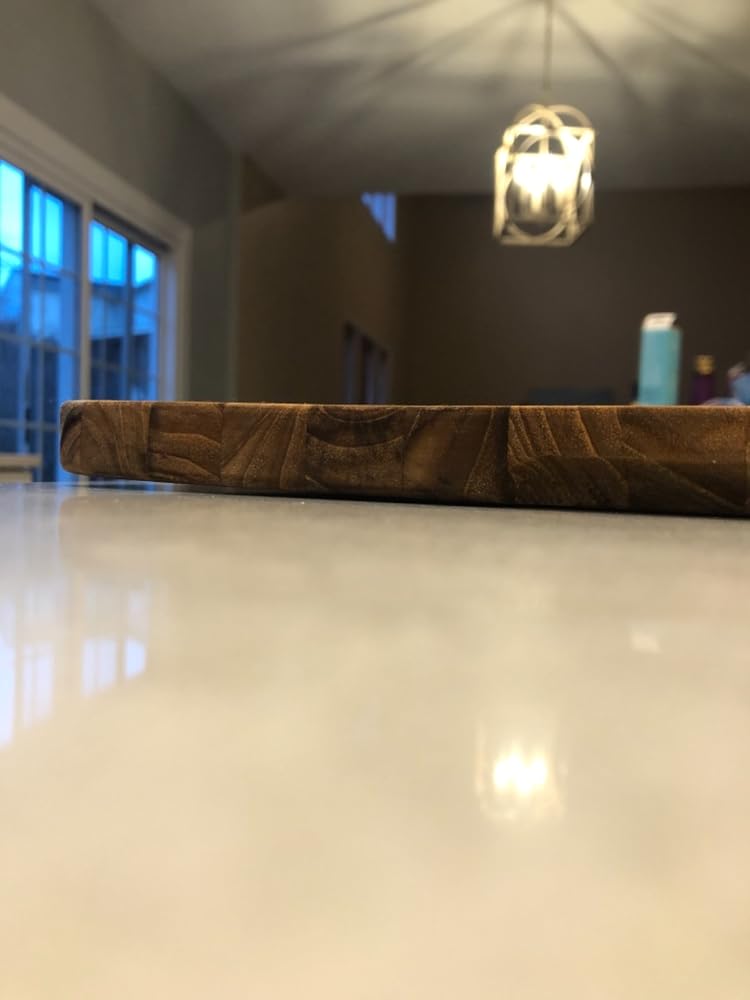
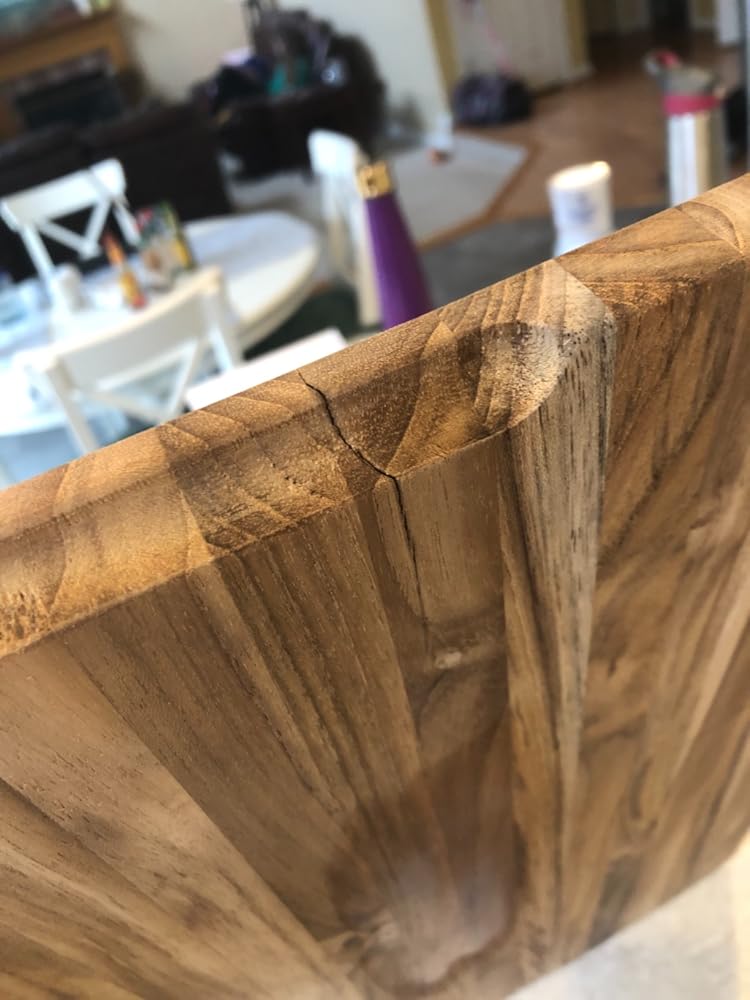
First and foremost, don't let my photos fool you -- that's what the cutting board looks like after being completely re-sanded and re-finished (in this case with Boos oil and board cream). Getting to that level of (figurative) polish is a couple hours of work minimum, with the use of power tools.Bottom line is this: the base product -- i.e. the edge-glued teak board -- is fine. It's the finish and details that are lacking. To start, what little woodworking there is on the board (the roundover on the edges, the routered juice groove, etc.) is hastily done and rough to the touch. For instance, the juice groove shows router marks from a dull cove bit, and wasn't sanded smooth at all; the edges were uneven, some sanded a lot, some a little, some not much at all; the hole in the corner was a bit oblong from the drill bil walking; the list goes on. All potentially fixable, but therein lies the next issue: the finish.Suffice to say, the finish (i.e. the food safe coating that in theory seals the board) was simply subpar. Not only was it an odd sallow color (most food safe oils/waxes go on mostly clear or slightly amber), it was thin and unevenly applied. A well-finished cutting board or butcher block should have a slight sheen when viewed at a shallow angle, the surface saturated with oil and then wiped of the excess to seal in moisture and protect it. The way this thing came, it was basically matte, and viewing at said shallow angle only made obvious where the finish was either thin to nonexistent (basically the whole center of my board). Running your hand across it, the board feels slightly rough, sanded to maybe 150 grit (I'd say for an oily hardwood like teak, you'd want at least 180-220). With both the poor finish and hasty woodworking, it comes off as a cheap board, which I suppose this is, so it's really more of a "you get what you pay for" thing.To remedy the issues above, I sanded the finish off the large flat surfaces with an orbital sander -- a real pain, as the oil mixed with sanding dust gums up sandpaper quick until you get down to the raw wood. Luckily the stock finish isn't thick/well-penetrated as noted above. A bigger pain is/was sanding the juice groove free of the poor stock finish and then smooth of all the router gouge and burn marks it came with, as that has to be done by hand. Again, the stock oil finish gums up sandpaper quick, and it's a hassle. Finally, I hand sanded all the poorly sanded edges/corners, and fixed the slightly ovular hole as best I could, then finished with two coats of Boos oil and a final coat of the Boos board cream.After all that effort, it's a nice looking board that has pretty-looking depth and shimmer to the grain, feels nice in the hand, and is actually sealed well enough for general use as well as washing off after. It doesn't surprise me at all to see that some people have experience warping and/or splits after a relatively short time using the board as it comes; that subpar finish would maybe last 2-3 thorough washes, and if people are fairly vigorous with soap (say, after cutting meat or fish), it would require re-oiling right away. Store a relatively thin board like this with no protection in dry-ish winter air and it's bound to warp or split. In truth, I wish it had just come unfinished, as the oil that is already on the board made re-sanding and finishing much hard and take longer.In any case, if you don't mind the rough edges (both figurative and literal) and have the patience to do some sanding and re-oiling, this could be an okay board for you. But even then, for a bit more money I bet you could find a slightly better board to start with.


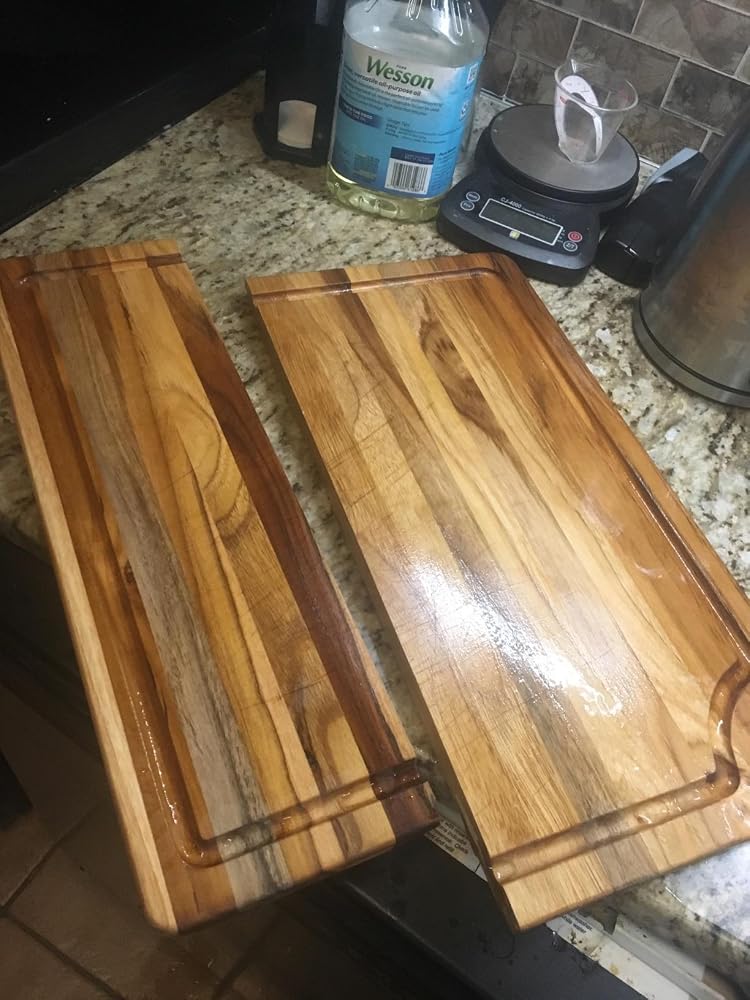
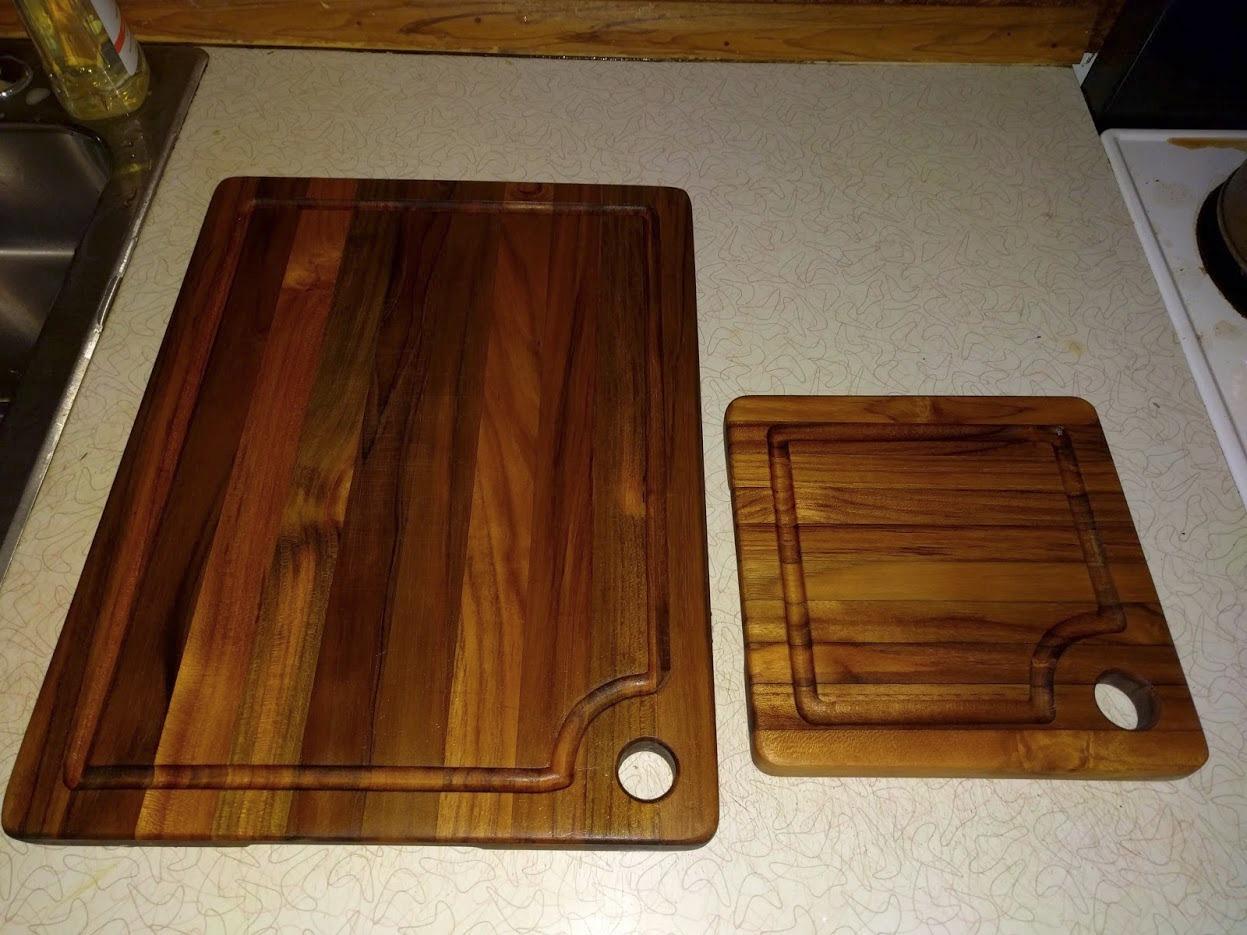
Purchased both the 8 by 8 and the 16 by 12 inch boards (shown via pic). Both are excellent values. Would certainly buy again. The wood in craftsmanship are top notch for the price, as is the delivery and packaging. Recommended buy.
Love this cutting board. Look great and beautiful solid teak wood.
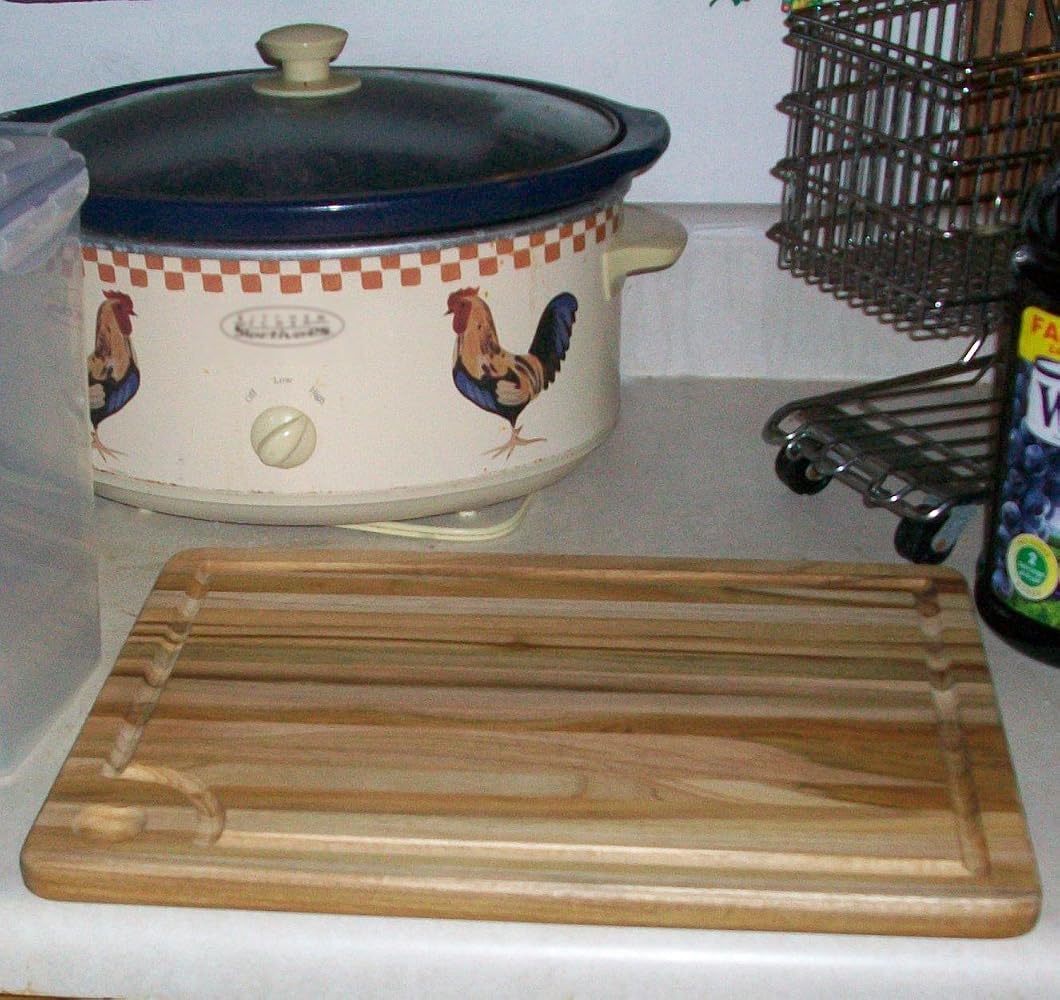
nice cutting broard
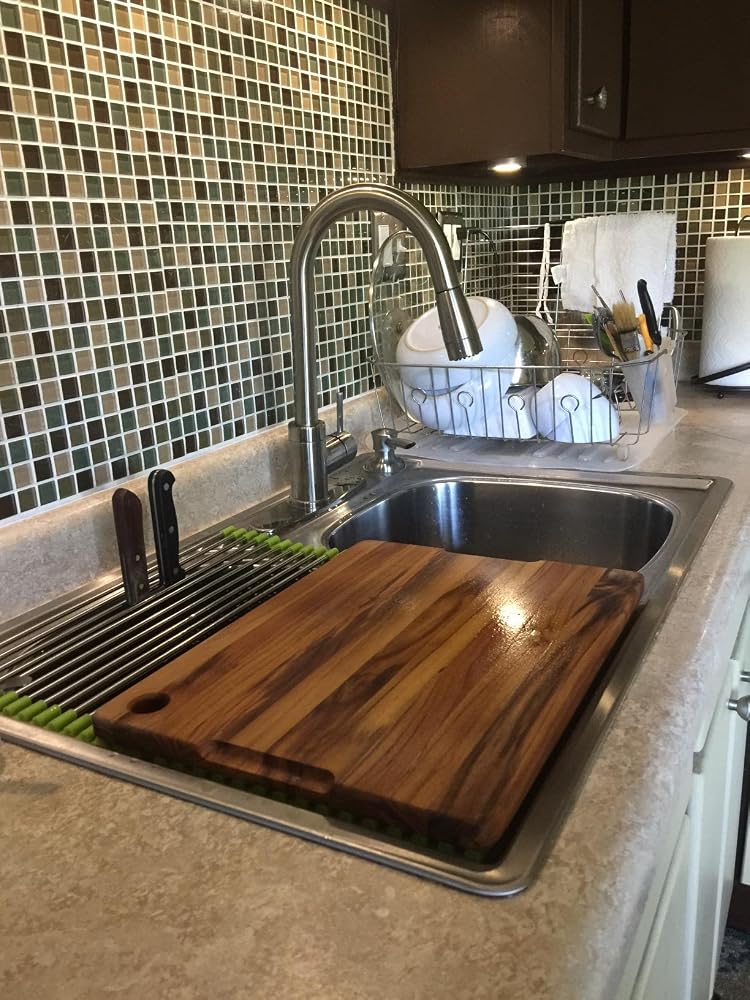
Upgraded from my split bamboo board to this beauty -- no regrets! The grooves are excellent for minimizing mess. It's lovely and gentle on my knives. Photo UPDATE FROM 2025, 9 years later. The only cutting board that’s held up more than a year. Indestructible. Ordering a 2nd.

Very nice. Love the different shades of wood. I picked this one after seeing reviews on YouTube from America's test kitchen. You can't even see any knife marks. I did season it first. Perfect size. Not too heavy. I keep it out on the counter and I like seeing it there. I have used it for 3 weeks now. Still no knife marks.
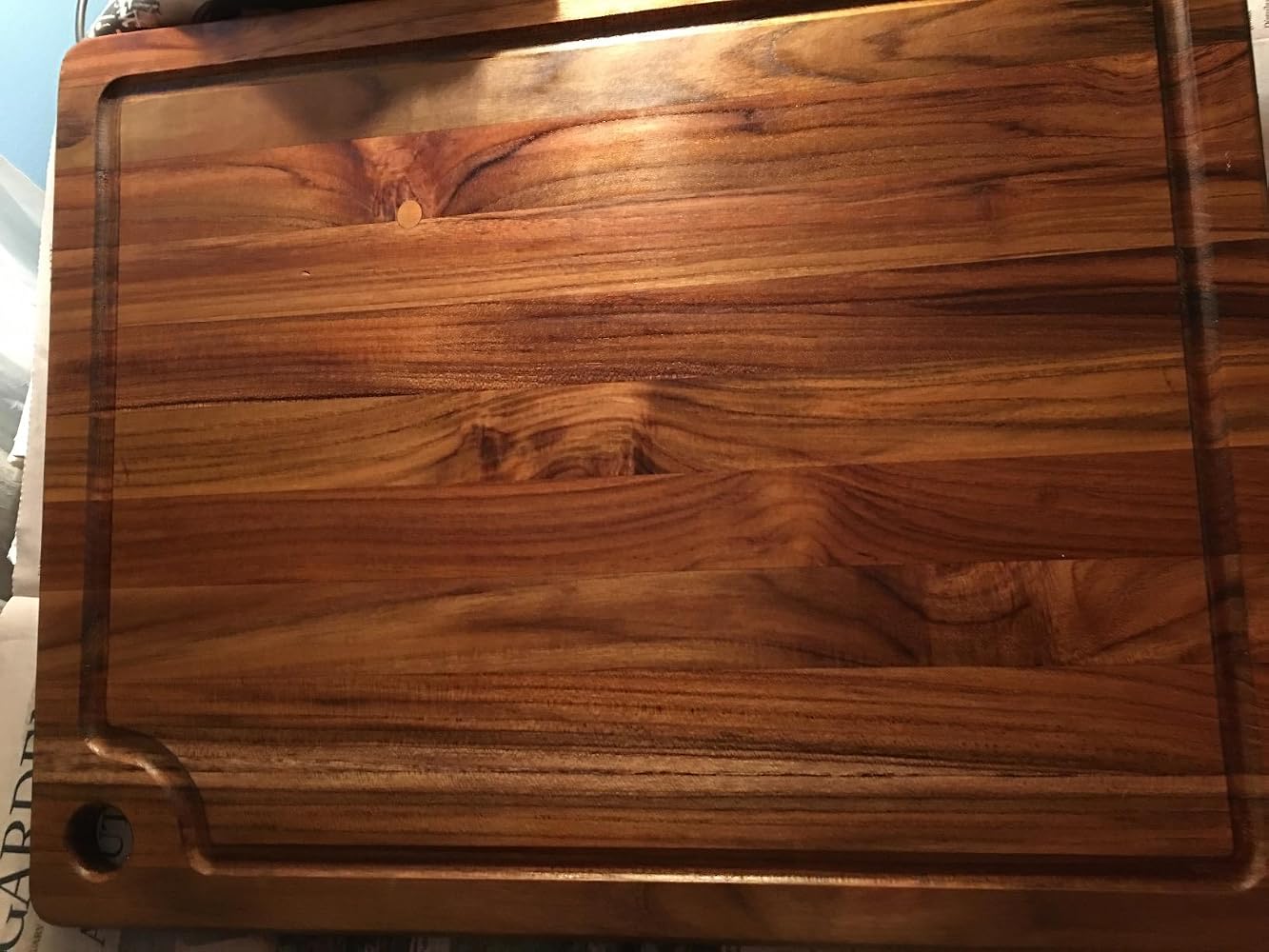
This is a very nice board. I am using Howard's butcher block conditioner on it to keep it looking nice. You can chop on both sides of the board. One side has a juice ring while the back is simply solid. The piece of teak that my board is made of is beautiful and looks similar to the photo. Each one is unique and will appearance will vary.

While it can show some cuts, once I sealed this cutting board with bees wax and food grade mineral oil, it looks and feels great. I am esp. happy that I can now cut over one side of the sink and dispose or push food to a bowl on the other. I use both sides, depending on my need. We added bumpers so the wood would drain and not soak up water (see photo).
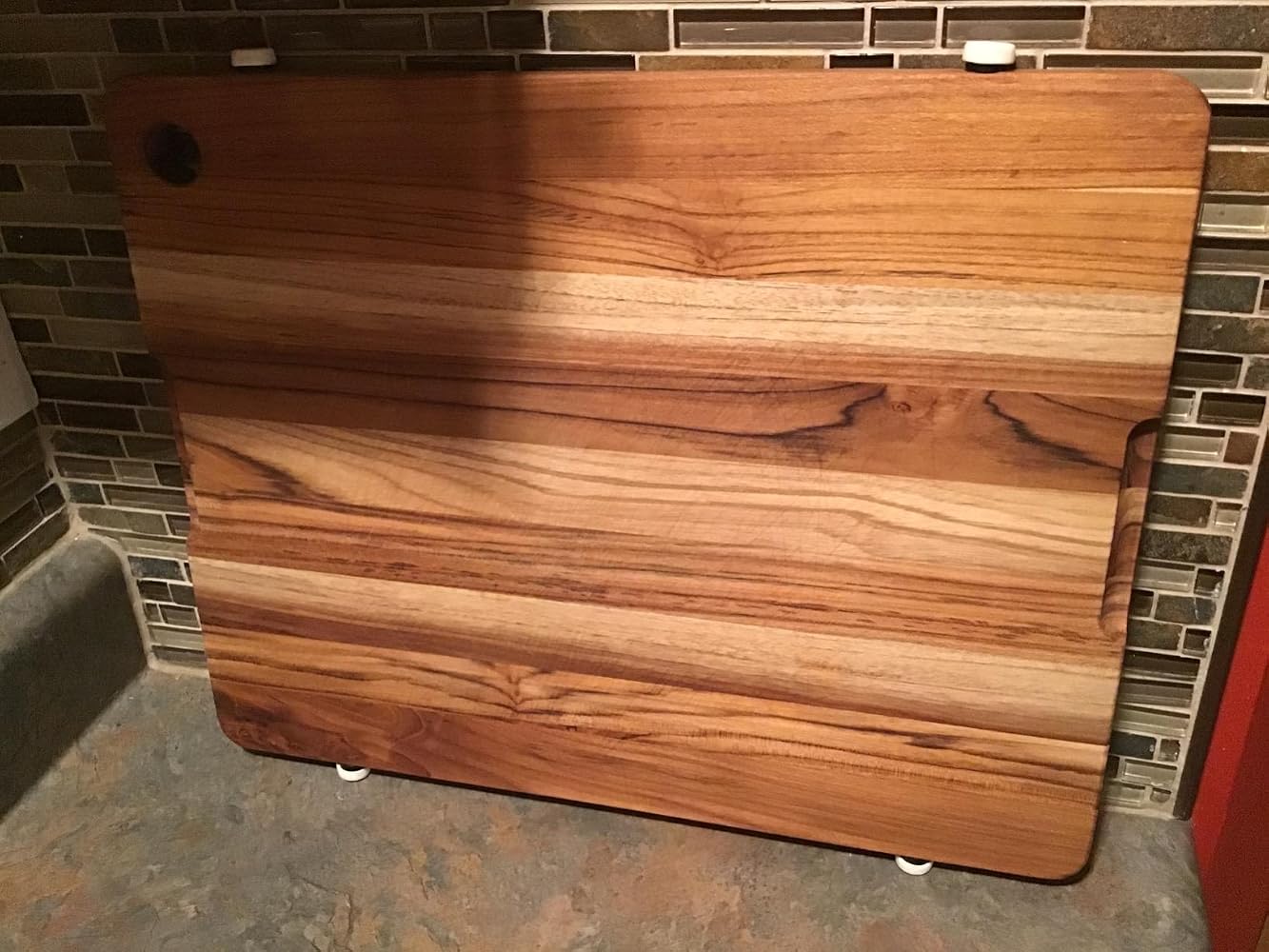
After years of owning it, I can confidently say that it’s worth the money. I just resanded the top today and it looks amazing, even more so than when it was new! It doesn’t chip easily like bamboo boards nor does it raise grain when wet. Overall, if you want a large cutting board for an ok price, this ones it! I had to order it twice because the first came broken but they were cool about it and got me a replacement asap. Overall would rec it to anyone looking for a cheap/nice cutting board.
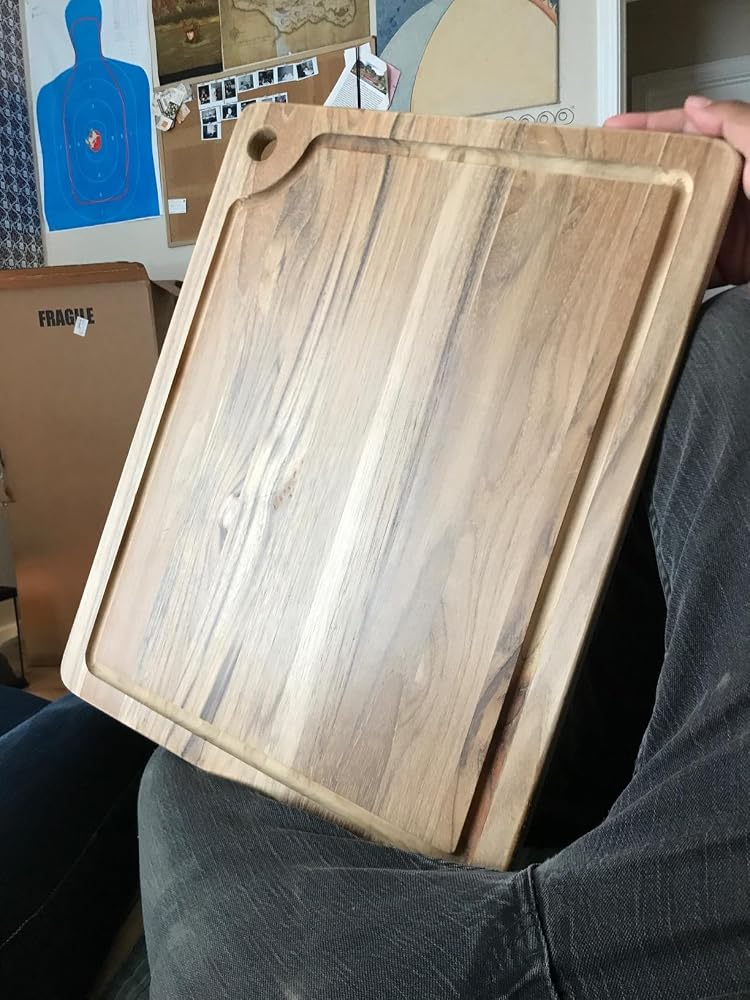
Thicker than one I bought online at Amazon a few years ago. Love having a second one plus three more to give as gifts.
I ordered 3 different sizes of cutting boards. The largest 2 sizes are sanded like velvet and the channels are also very smooth. This bar board set is nice but the channels are not as smooth. The oiling cloth snagged a bit on all of them. They will still be useful and make nice gifts. Its nice that each board has its own wrapper/sleeve.
They are so pretty and functional!!
This cracked along some dark streaky bits in the wood (not the glue joint) after 2 months. It now just leaks and makes a giant mess. I’ve been oiling and conditioning it and only hand washing so it should have been fine. The wood is pretty rough too though it does look nice. But now that it has cracked and started leaking it’s basically useless. I’d skip this one and spend a bit more for something better quality