What Size Cutting Board Do You Need?

It usually starts the same way. You're standing in a kitchen store — or scrolling through a product page — and you think: a cutting board is a cutting board. Just pick one.
So, you grab something that looks about right. It arrives. You unwrap it. And three weeks later, you realize it's too small for a butternut squash, too big for your sink, or somehow both at the same time.
Size is the single most important decision when buying a cutting board — more than material, more than grain pattern, more than price. Get the size wrong and everything else is irrelevant. Get it right and you'll wonder how you ever cooked without it.
We've spent over a decade watching customers buy boards, return boards, and eventually find the one that fits. Here's what we've learned.

Compact (Under 14”): The 6 AM Board
It's early. The coffee's brewing. You need to slice a lemon, chop some herbs for an omelette, or dice an avocado for toast. You're not staging a production — you just need a clean surface that's right there.
That's the compact board. Under 14 inches, it fits beside the stove, next to the coffee maker, or in the narrow strip of counter between the sink and the wall. It's the board you reach for without thinking — because it's always within arm's reach.
Best for: quick fruit and vegetable prep, garnishes, herbs, cheese slicing, small kitchens, apartment living, and anyone who cooks for one or two.
The test: Can you dice an onion without pieces falling off the edge? If yes, the compact is all you need for daily prep. If you're constantly catching runaway food, size up.
Shop compact boards under 14".

Medium (14”–18”): The Wednesday Night Board
It's 6:30 PM. You've got 45 minutes before dinner needs to be on the table. Chicken breasts need butterflying. Vegetables need dicing. Someone needs to chop the garlic and someone else is already asking what's for dinner.
The medium board is where most cooking actually happens. At 14 to 18 inches, it's big enough to break down a whole chicken, lay out vegetables for a stir-fry, or prep a full weeknight meal — without taking over the kitchen. It fits in most standard sinks for easy cleanup, and it's light enough to move between the counter and stove without effort.
Best for: weeknight dinners, couples, meal prep sessions, everyday cooking, and kitchens with standard counter space.
The test: Can you prep an entire meal on one board without having to clear scraps midway? If not, you're working too small. The medium should give you room to work across the whole surface with ingredients staged on one side and your cutting area on the other.
💡 THE MOST COMMON MISTAKE
Most people buy their first board too small. They choose based on how much storage space they have, not how much cutting surface they need. A board that's comfortable to store but cramped to cook on gets used less — and a board you don't use is the wrong board.
Large (18”–24”): The Saturday Grill Board
The charcoal's lit. The brisket's been smoking since morning. The ribs are almost there. And when they come off the grill, they're going somewhere — and that somewhere needs to be big enough, stable enough, and tough enough to handle the moment.
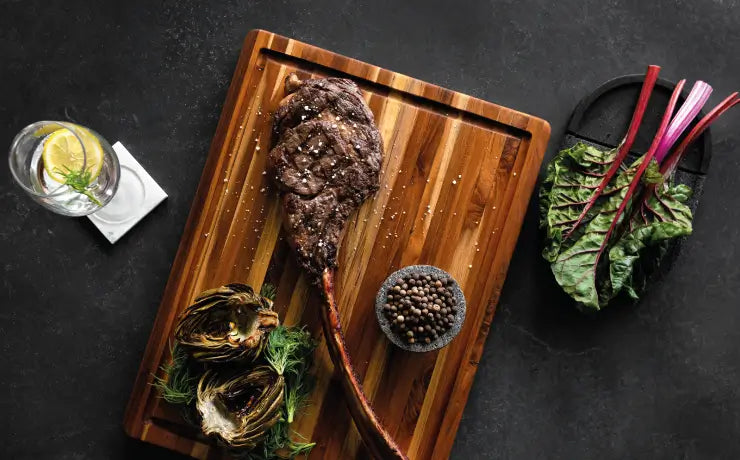
The large board is built for grill season. At 18 to 24 inches, it can hold a full rack of ribs while you slice. It can catch every drop from a resting brisket in its juice groove. It can carry a whole spatchcocked chicken from the grill to the table without a transfer plate.
But it's not just a grill-season tool. A large board earns its place year-round: Sunday roasts, holiday hams, big batch meal prep, and any time you need room to work with a full-sized piece of protein.
Best for: grilling, roasting, carving, big batch cooking, families of four or more, and anyone who regularly works with large cuts of meat.
The test: Can you carve a whole roast chicken on your current board without the juices running over the edge? If not, you need the juice groove and surface area that only a large board provides.

XL (24”+): The Thanksgiving Board
Everyone's here. The turkey's done. Someone needs to carve it — and you need a surface that can hold a 20-pound bird, catch all the juices, and look good enough to stay on the table as the centerpiece while you do it.
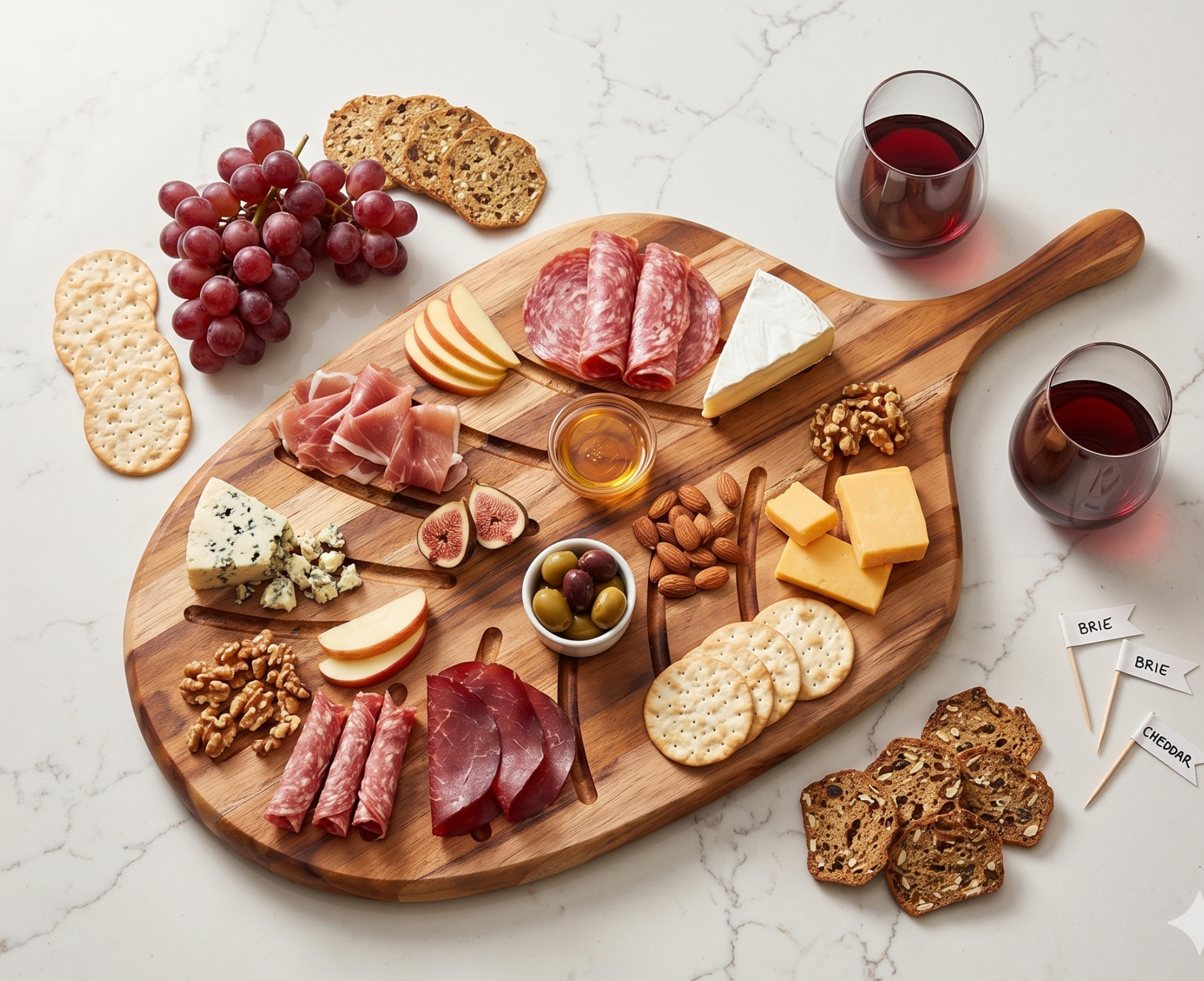
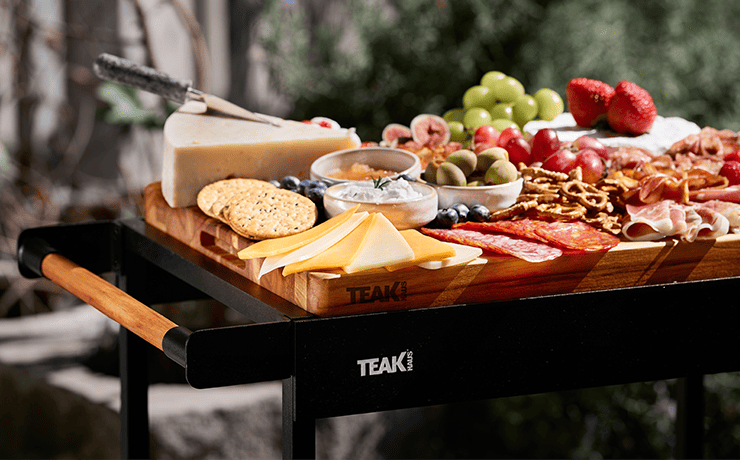
The XL board is the entertainer. At 24 inches and above, it's not just a cutting surface — it's a serving platform, a charcuterie stage, and the anchor of any spread. Thanksgiving turkey. Summer cookout for fifteen. Christmas morning brunch. The moments when the board moves from the kitchen to the center of the table and stays there.
Best for: holiday carving, entertaining, charcuterie boards, large families, anyone who hosts regularly.
The test: Do you host more than four people at least once a month? If yes, an XL board will change how you serve. If hosting is rare, a large board covers most of what the XL does — save this one for when entertaining is part of your lifestyle.
Shop Extra Large boards (24"+)
🌿 SIZE AND SUSTAINABILITY
Bigger boards use more wood — which is why sourcing matters at every size. Every TeakHaus board, from our smallest compact to our largest XL, is built from the same FSC®-certified, plantation-grown teak with zero waste production. The scraps from cutting a compact board become the finger joints in an end-grain board. Nothing is wasted, regardless of size.
The Two-Board Kitchen: Why Most Cooks Need Two Sizes
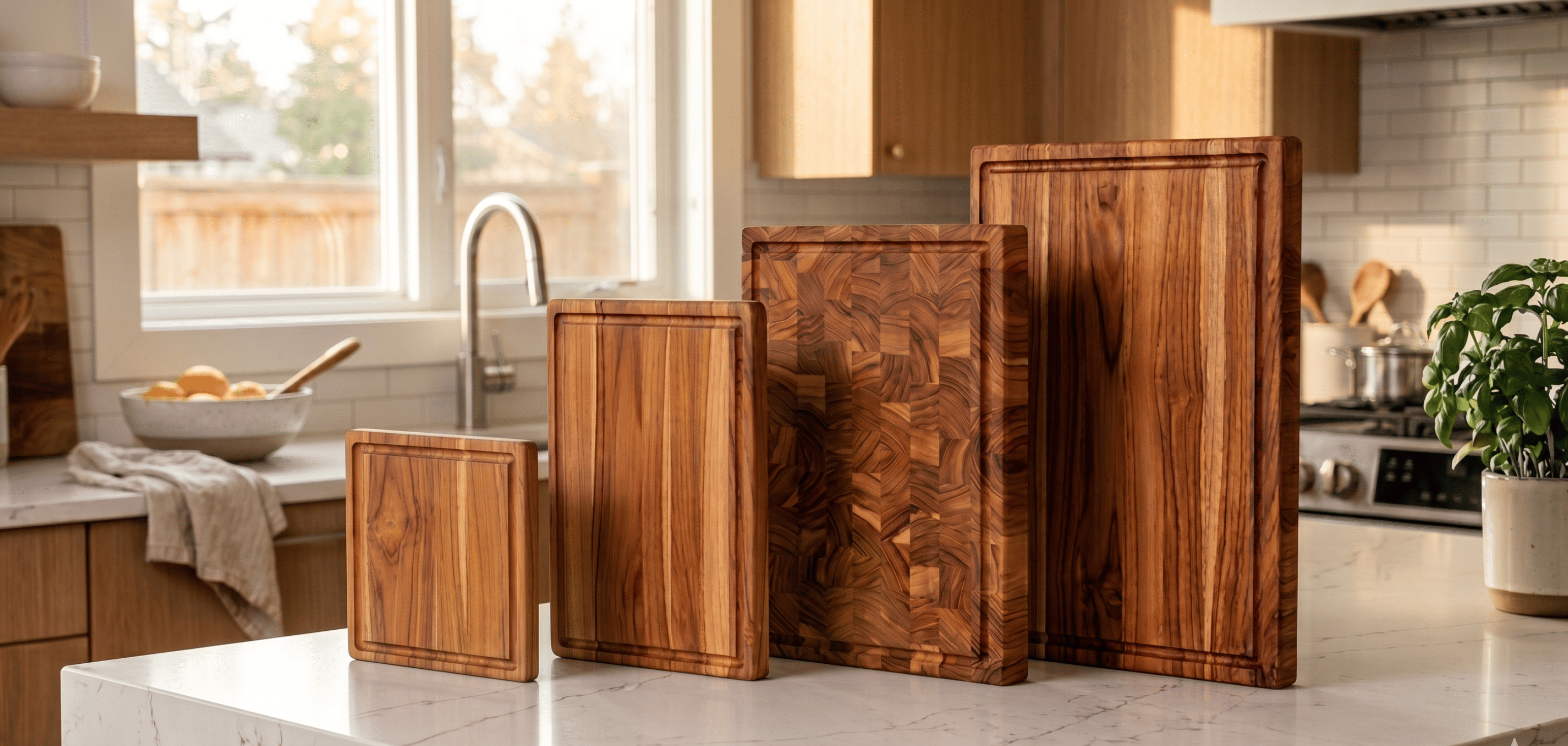
Here's what we've learned after a decade of watching how customers actually use their boards: most kitchens work best with two. A compact or medium for daily prep, and a large or XL for the weekend events.
Think of it like knives. You don't use a chef's knife to slice a lime, and you don't use a paring knife to break down a chicken. The same logic applies to boards. A small board for small jobs. A big board for big moments.
The most popular combination among our customers: a medium (14”–18”) for weeknights paired with a large (18”–24”) for weekends and grilling. Between the two, you're covered for everything from Tuesday stir-fry to Saturday brisket.
How to Measure: Counter, Sink, and Storage
Before you buy, check three things:
Counter space. Lay a piece of newspaper or a towel on your counter in the size you're considering. Can you still reach the stove, the sink, and your prep ingredients? The board shouldn't dominate the workspace — it should anchor it.
Sink clearance. If you plan to wash your board in the sink (you should), check that it fits. Most standard kitchen sinks are 22” wide — a medium board fits comfortably; a large board may need to be washed at an angle or in a utility sink. XL boards are wiped down on the counter.
Storage. Board stores best upright. Measure the height of your cabinet, the depth of your pantry shelf, or the gap beside your fridge. A board stand is the best option if counter space is tight — it keeps the board accessible and lets air circulate for drying.
Find Your Board
The right cutting board isn't the biggest one or the most expensive one. It's the one that matches how you actually cook. Daily prepper? Go compact. Weeknight warrior? Go medium. Grill master? Go large. The one who hosts? Go XL.
Every TeakHaus board is built from the same FSC®-certified, edge-grain teak — the material that won't warp, won't crack, and won't dull your knives. The only variable is size. Get that right, and the board does the rest.