Edge Grain vs End Grain vs Herringbone Cutting Boards

When people shop for a cutting board, they usually think about size. Maybe material. But the detail that actually determines how a board performs, how long it lasts, and how it feels under a knife? That's the grain.
Every TeakHaus board is made from the same FSC-certified teak. But how that wood is cut and assembled changes everything — from the cutting experience to durability to the way it looks on your counter.
Here's what you're actually choosing between:
Edge Grain — The Reliable Workhorse
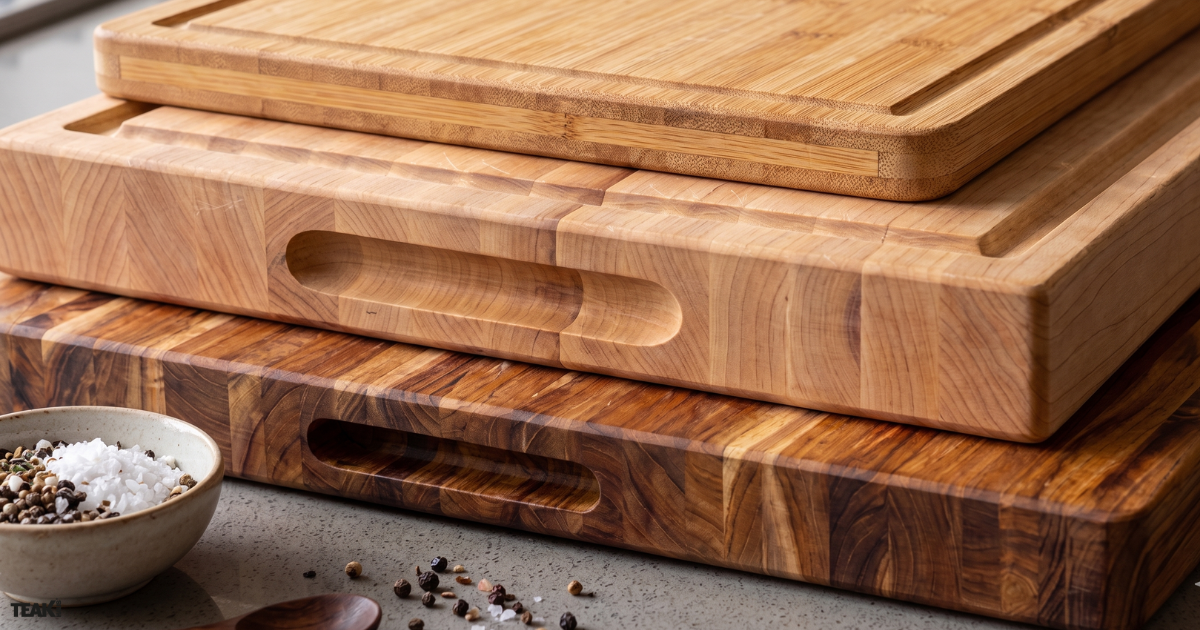
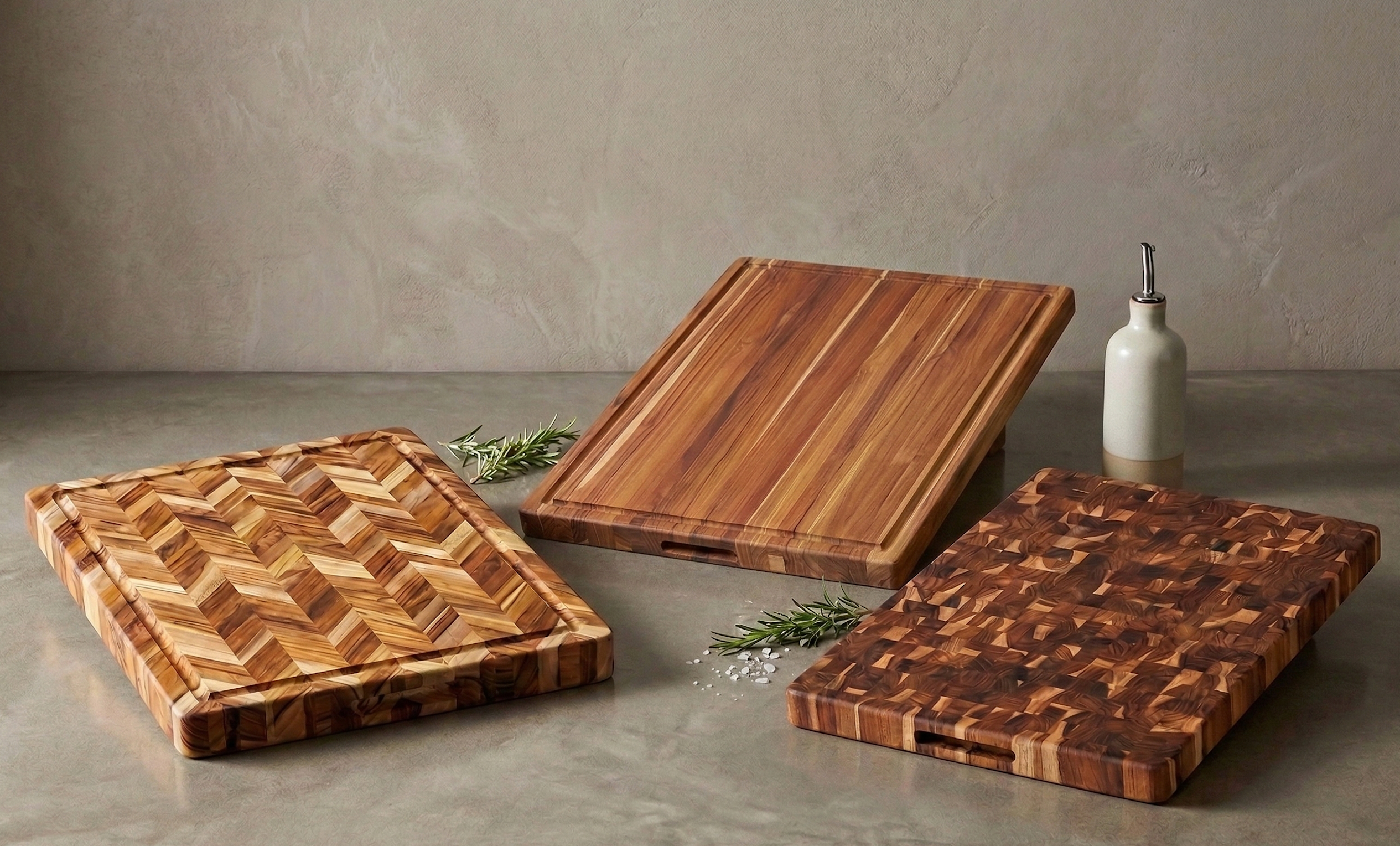
This is the classic. Long strips of teak glued side by side, with the narrow edge of each strip facing up. It's what most people picture when they think "cutting board."
Edge-grain boards are lightweight, durable, and easy to maintain. The smooth, uniform surface is great for everyday prep — slicing vegetables, mincing herbs, carving bread. They're also the most affordable option, which is why America's Test Kitchen has recommended our edge grain boards for over 10 consecutive years.
The trade-off? Knife marks will show more over time because the blade cuts across the wood fibers rather than between them. That's purely cosmetic — the board stays perfectly functional — but it's worth knowing.
Best for: Daily cooking, first-time quality board buyers, and anyone who values a balance of performance and price.
End Grain — The Chef's Favorite
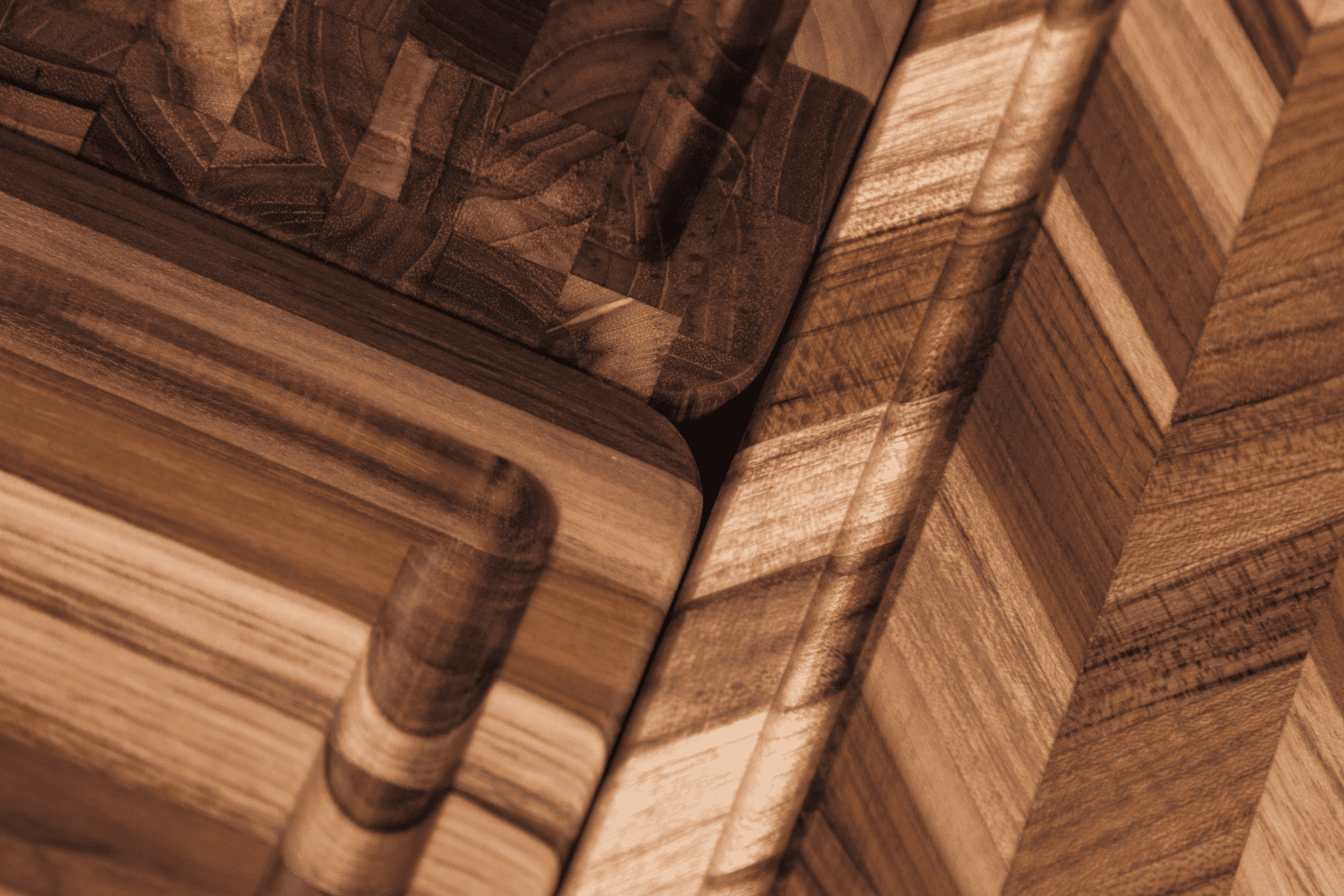
This is the one professional chefs reach for. Instead of long strips, the wood is cut into blocks and assembled with the end of each piece facing up — like a mosaic of tiny wood columns.
The result is a board that's gentler on your knife edge, because the blade slips between the wood fibers instead of cutting across them. End grain is also self-healing — those fibers close back up after each cut, so the surface stays smoother longer. It's the reason butcher blocks have been made this way for centuries.
End-grain boards are thicker and heavier, which gives them a solid, professional feel on the counter. They do require a bit more oiling since the exposed end grain absorbs more moisture — but that same absorbency is what makes them so knife-friendly.
Best for: Serious home cooks, anyone who values knife longevity, heavy-duty prep and carving, and a board that ages beautifully.

Herringbone — Where Function Meets Art
Our Herringbone collection takes edge-grain construction and arranges it in a striking geometric pattern inspired by 1920s design. The wood pieces are set at alternating angles, creating that signature zigzag look with hundreds of natural tones and grains.
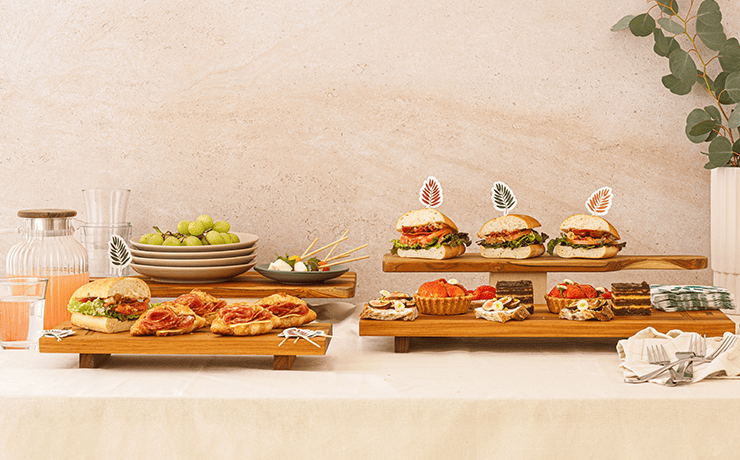
Functionally, it performs like an edge-grain board — same durability, same knife-friendliness, same easy maintenance. But the visual effect makes it a natural centerpiece for serving. Prep your ingredients on one side, then flip it over and use it as a charcuterie or cheese board when guests arrive.
Every Herringbone board is reversible with a juice canal on one side and a tablet slot on the other — perfect for following recipes while you cook.
Best for: Entertainers, design-conscious cooks, dual-purpose prep and serving, and gift-giving.
The Quick Comparison
| Edge Grain | End Grain | Herringbone | |
|---|---|---|---|
| Knife-friendliness | Great | Best | Great |
| Self-healing | No | Yes | No |
| Weight | Lighter | Heavier | Lighter |
| Maintenance | Low | Moderate | Low |
| Visual appeal | Classic | Bold mosaic | Striking |
| Serving board | Good | Good | Best |
| Starting price | From $43 | From $44 | From $60 |
There's no wrong choice here — every TeakHaus board is FSC-certified, built to last decades, and comes pre-oiled and ready to use. The right one depends on how you cook and what you value most.
Not sure which one is right for you? Browse the full collection and see them up close:
Shop Edge Grain |
Shop End Grain |
Shop Herringbone |